What you need
You need an instrument or microphone, a compatible USB audio interface, a data cable, and headphones or speakers. Connect a guitar to a Hi-Z/instrument input. USB-C devices may connect directly; Lightning devices require a compatible adapter. Use a powered hub or external interface power when bus power is insufficient.
Connect and listen
- Turn down monitor volume, then connect the interface.
- Open NAM FX and allow microphone access. USB audio input needs this permission too.
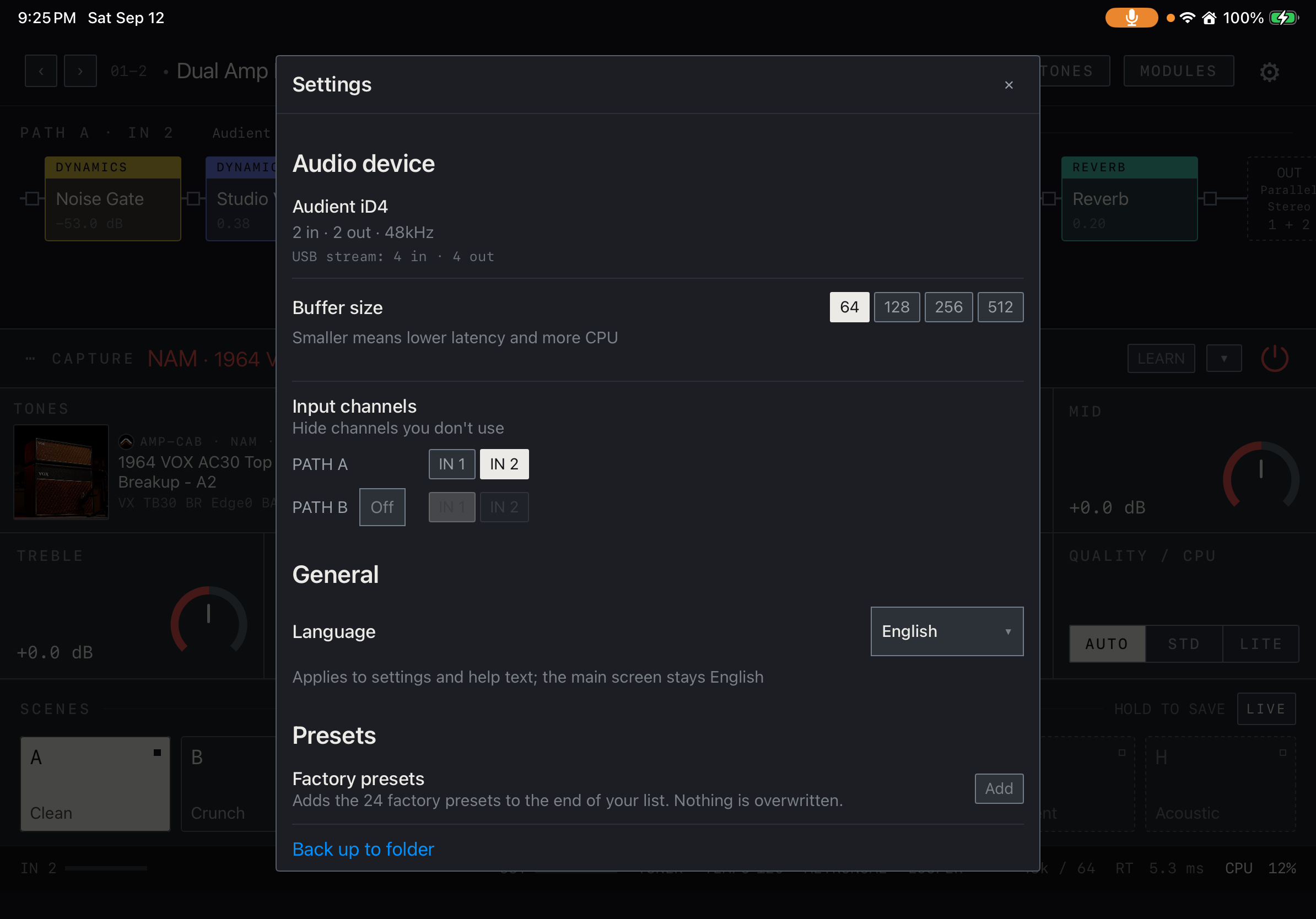
- In Settings, check the audio device and select the physical input used by PATH A.
- Play and watch the IN meter. Adjust the interface gain to avoid sustained clipping.
- Check the OUT meter and output connections, then raise monitor volume gradually.
Find it on screen
- Check the connected interface under Audio device.
- Under Input channels, choose the physical IN used by PATH A.
- Close Settings and check both the bottom IN/OUT meters and audible output.
Start with a simple chain
First verify input and output with built-in effects, without a NAM model or IR. Amp capture files are not bundled. An empty NAM slot is not a loaded amp sound. If Resume appears after an interruption, check your connections and monitor level before tapping it.
Platform differences
This manual uses iPad as the reference screen. Its large workspace supports chain editing and LIVE controls in landscape and portrait. iPhone also rearranges controls for portrait and landscape. Mac runs a native standalone app with device selection in Settings. Use the same interface for input and output on Mac. Presets do not sync automatically between devices; transfer a personal backup folder.
Find it on screen
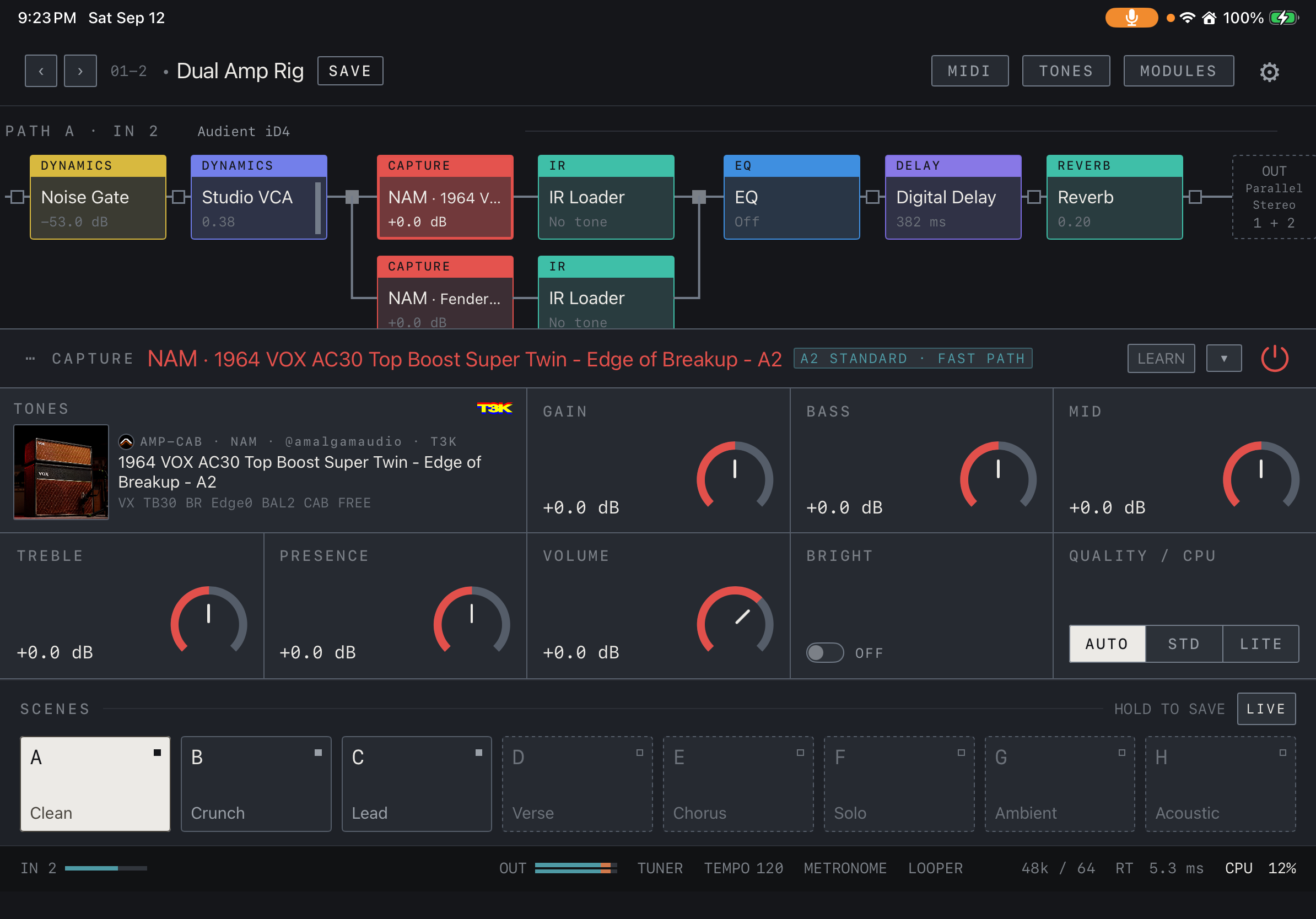
- The landscape iPad view shows the chain, parameters and scenes together.
- See the device sections in the gallery for iPhone and Mac layouts.